Occupational therapy assistant (OTA)
Help people regain independence and improve their quality of life. In Stark State’s OTA program, you’ll learn how to support patients recovering from illness, injury, or disability while building the hands-on skills needed for a meaningful career in health care.
Program at a glance
DEGREE TYPE
Associate of Applied Science
PROGRAM FORMAT
Hybrid
LENGTH (FULL TIME)
5 semesters
CAREER COMMUNITY
Note: Many Stark State classes have online and in-person options, including required general education courses.
Program overview
The occupational therapy assistant program at Stark State College prepares you to work under the supervision of a registered occupational therapist to help patients achieve maximum independence in daily activities, work, leisure, and social participation.
You’ll learn how to help individuals whose lives have been disrupted by accident or illness, birth defects, developmental challenges, or social and psychological conditions. Graduates are eligible to take the national certification exam administered by the National Board for Certification in Occupational Therapy and pursue state licensure to practice as a certified occupational therapy assistant.
Program details
Your coursework focuses on human development and the tasks and skills used in everyday life. You’ll learn how to help therapists evaluate patient needs and then implement treatment plans through therapeutic activities that improve strength, coordination, and functional abilities.
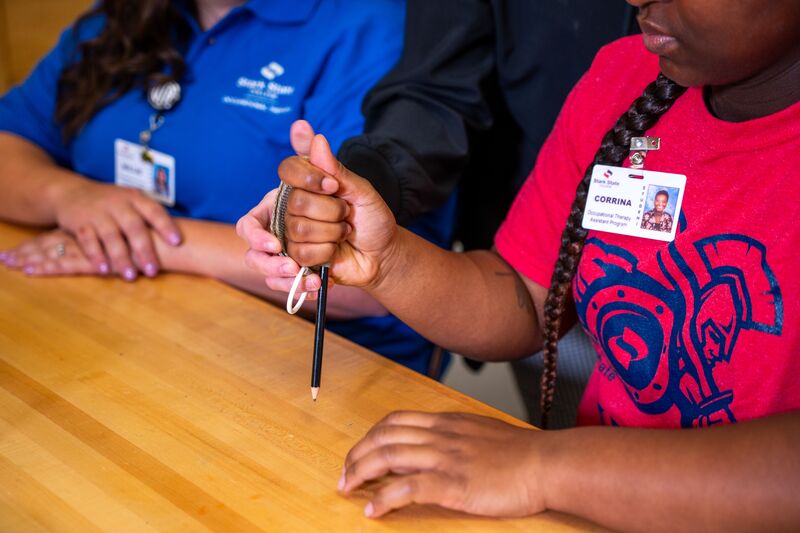
You may also guide patients in using adaptive equipment and techniques that help them dress, feed themselves, manage their homes, and return to work or school.
The occupational therapy assistant program is accredited by the Accreditation Council for Occupational Therapy Education (ACOTE) of the American Occupational Therapy Association (AOTA), 7501 Wisconsin Avenue, Suite 510E, Bethesda, MD 20814 phone number 1-800-729-2682, www.acoteonline.org. Graduates of the program will be eligible to sit for the national certification examination for the occupational therapy assistant administered by the National Board for Certification in Occupational Therapy (NBCOT). Information on the examination performance of Stark State graduates, as well as those from all other accredited programs, can be located at https://www.nbcot.org/Educators-Folder/SchoolPerformance.
COMMONLY ACCEPTED ACADEMIC STANDARDS: Program length must be reflective of commonly accepted standards for degree level as informed by the National Center for Education Standards (https://nces.ed.gov/programs/coe/glossary#m). Specific to occupational therapy entry level education for the occupational therapist and occupational therapy assistant, ACOTE defines the following:
- Associate’s degree: An entry-level occupational therapy assistant degree granted for the successful completion of an associate’s program of study, usually requiring at least 2 years (or equivalent) of full-time college-level study.
Your first step starts with applying to Stark State College. Then, follow the steps outlined in the program checklist and application.
Graduation rate data are based on the Accreditation Commission for Occupational Therapy Education calculations during recent Annual Accreditation reports. Calculations do not reflect students that started in the cohort but later left the program for reasons other than grades or clinical deficiencies.
Students who withdrew, or did not graduate with the entering cohort, for reasons other than academic performance
| Graduation year | Students entering | Students who withdrew, or did not graduate with the entering cohort, for reasons other than academic performance | Graduates | Graduation rates |
|---|---|---|---|---|
| 2025 | 33 | 10 | 29 | 88% |
| 2024 | 34 | 5 | 29 | 85% |
| 2023 | 35 | 9 | 30 | 86% |
| Total | 102 | 24 | 88 | 86% |
For additional information regarding NBCOT Certification Results please go to https://www.nbcot.org/Educators-Folder/SchoolPerformance
OTA students must be capable of following minimum skills and abilities for successful completion of the program: OTA Expectations
Careers and outcomes
Occupational therapy assistants work in hospitals, schools, clinics, mental health centers, rehabilitation facilities, and home-health agencies.
In the classroom
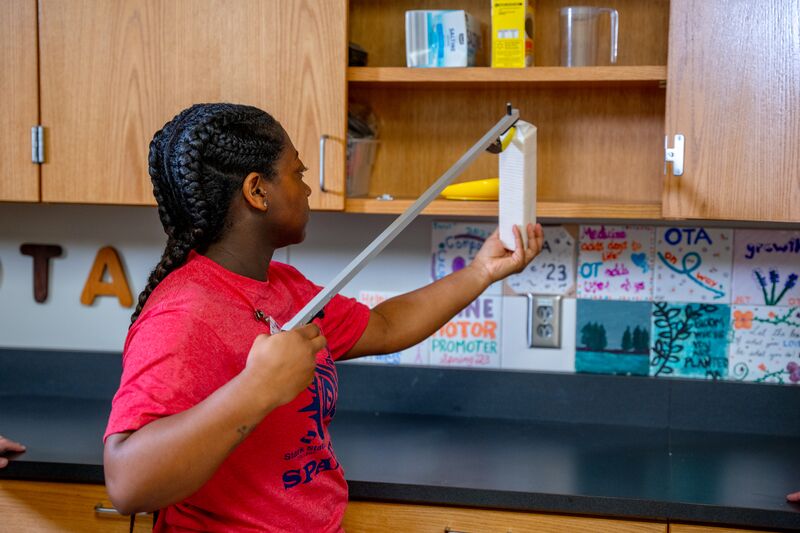
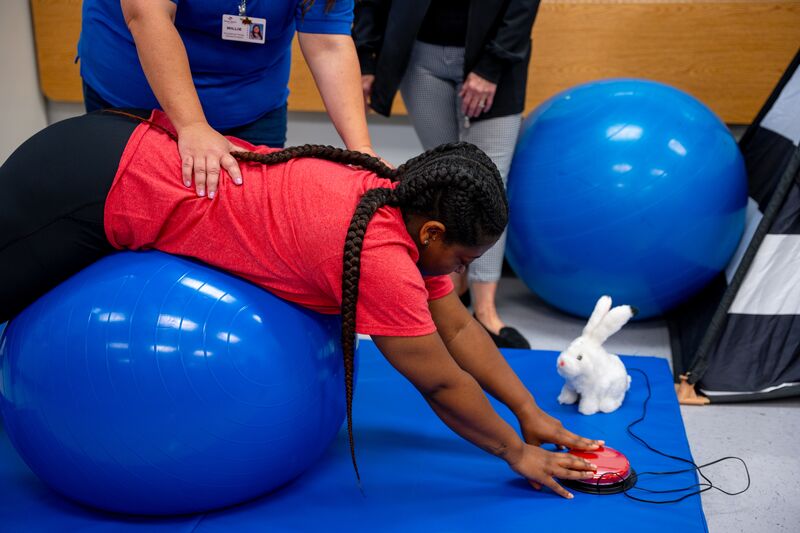
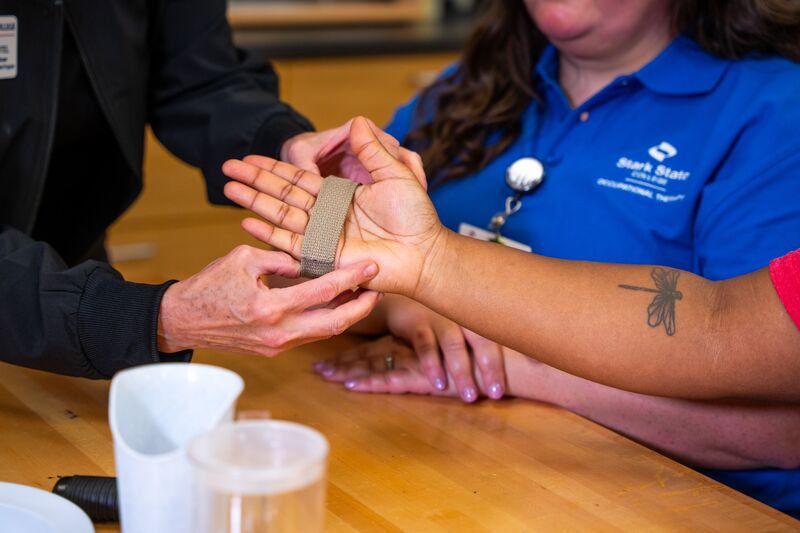
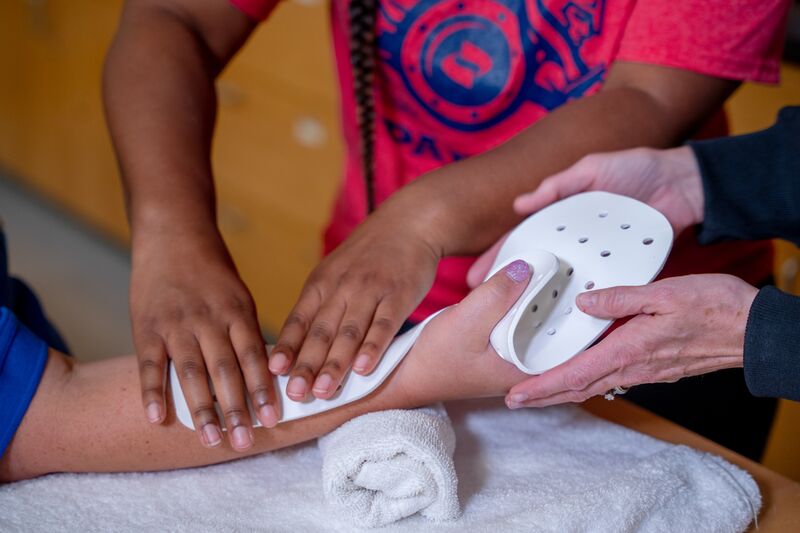
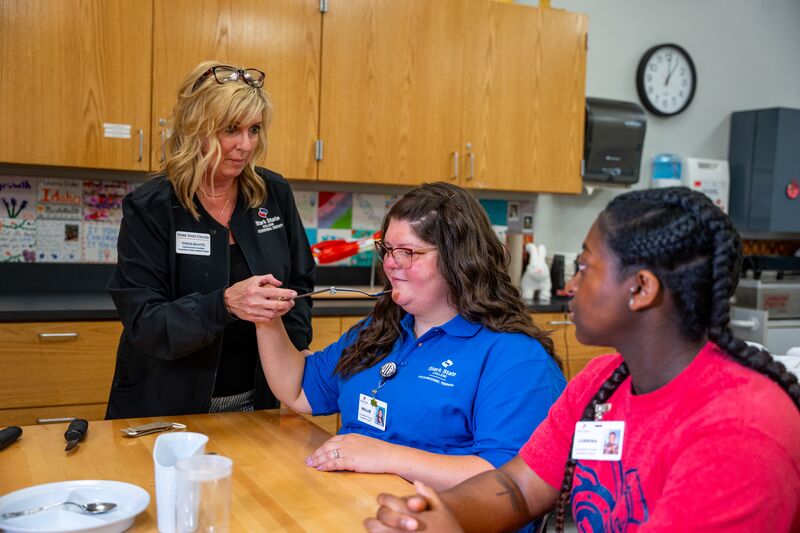
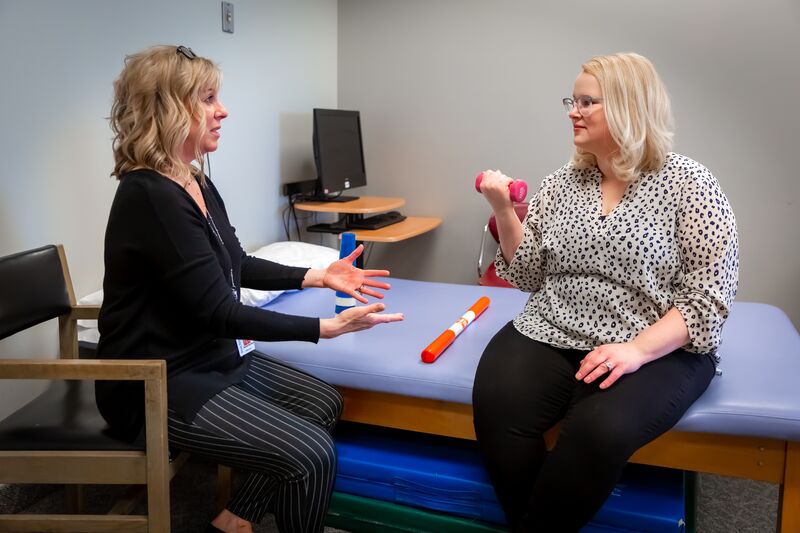
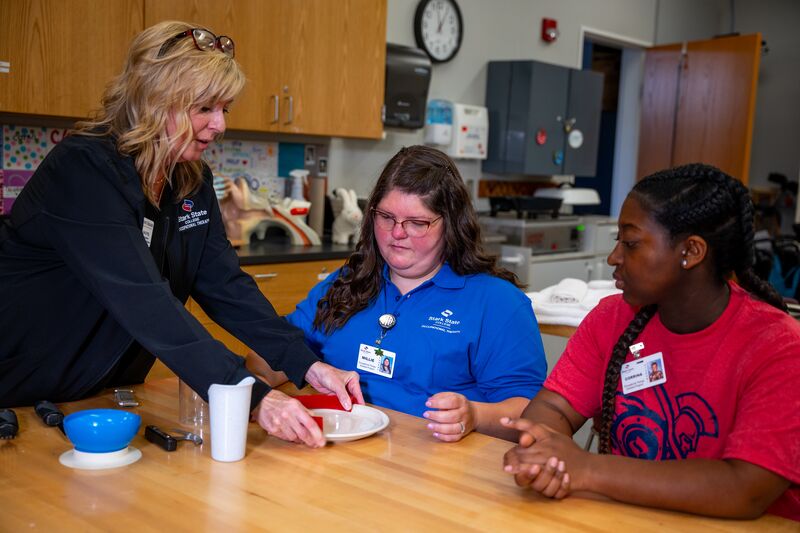
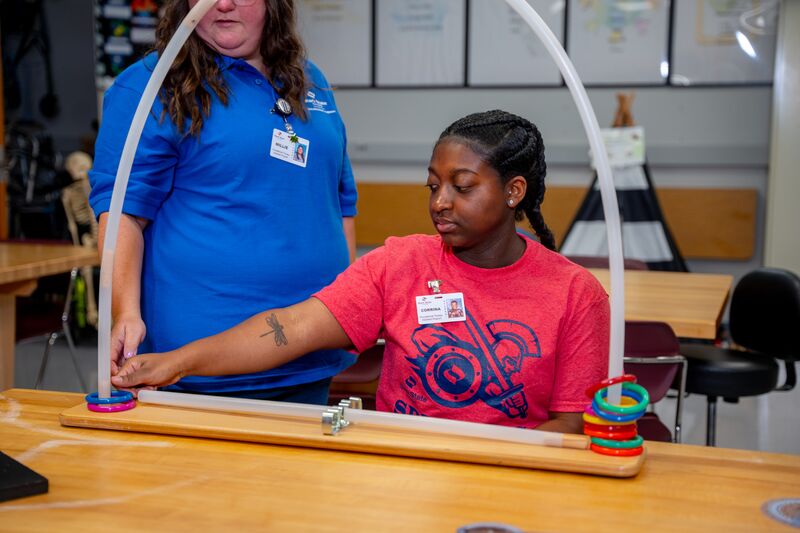
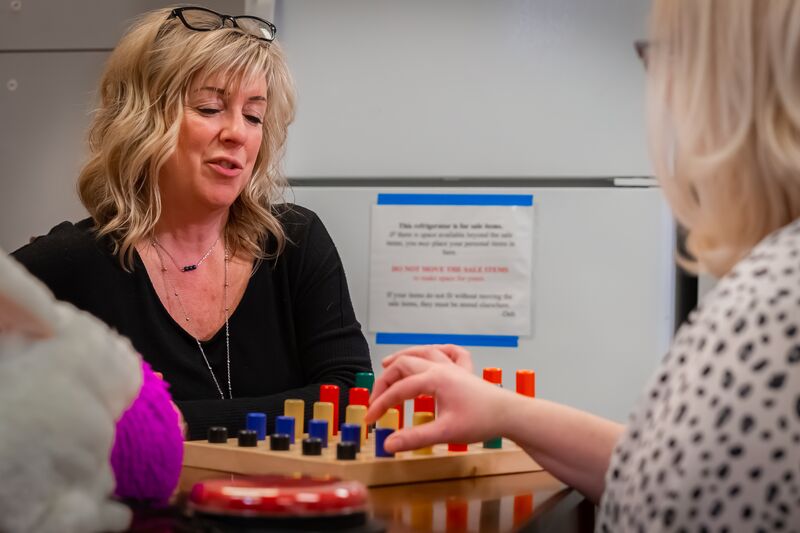
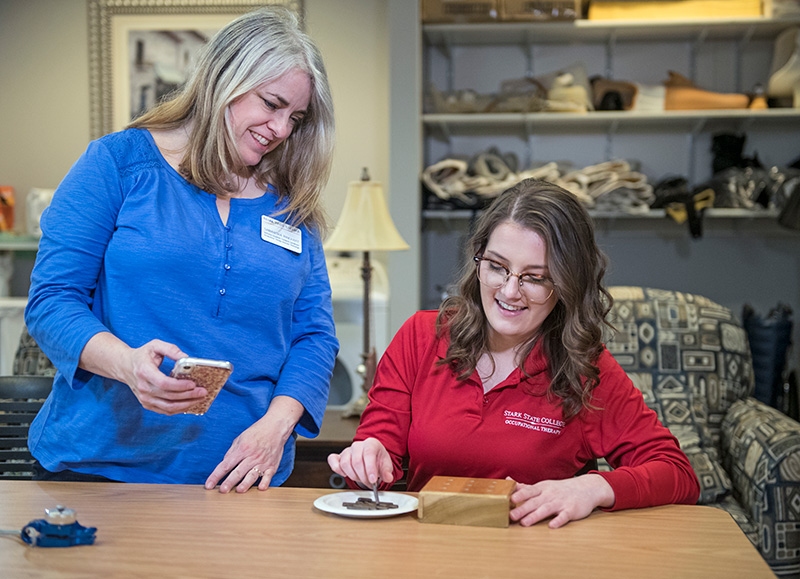
Practice hands-on therapy techniques in realistic clinical environments where you learn to guide therapeutic activities, work with adaptive equipment, and support patients as they build the skills needed for everyday life.
FAQs
Students are admitted once per year, during the fall semester.
Yes. Enrollment is limited. Therefore, acceptance by SSC does not automatically mean acceptance into the OTA Program. Candidates must become eligible by meeting specific requirements and must apply to the program. Formal notification of acceptance into the program is required.
Expenses include, but may not be limited to: tuition, college fees, textbooks, electronic documentation subscription, AOTA prep exam study tool, and supplies, liability insurance, health insurance, physical examination and immunization costs, background checks, uniforms, and transportation to and from off-campus clinical experiences. In addition, certification examination and state license application related fees should be expected.
Yes. Several arts and sciences courses included in the curriculum are TAG (Transfer Assurance Guide) approved, and are therefore transferable throughout the University System of Ohio. Technical courses must be evaluated by the institution where a student wishes to transfer. We do have articulation agreements with the University of Cincinnati and Indiana Wesleyan University that allows the graduates’ OTA degree to go towards a bachelor’s degree at these institutions.
Yes. Given the nature of the work, individuals considering the field of occupational therapy should have good strength, endurance, mobility, dexterity, and sensory perception. The work can be physically taxing since assistants help patients perform tasks and exercises throughout the day. This may involve lifting and supporting patient weight, bending, stooping, and pushing wheelchairs or equipment.
Yes, with limits encouraged. It is recommended that part-time employment be limited for the first four of five semesters. However, the actual number will vary depending on individual student circumstances. Students are strongly encouraged NOT to work during the 5th semester, due to the clinical and course requirements.
Once students begin the technical portion of the program, five semesters are required to reach completion. Most students take some or all of the required non-technical courses before starting the OTA sequence.
SSC’s program may or may not be able to accept in-progress OTA students, depending on space availability and the curriculum match between the two colleges.
Visit AOTA.org, OOTA.org, NBCOT.org, or OTPTAT.ohio.gov to learn much more about the occupational therapy professions. You may also visit the Career Development Office in Room M104
Related programs
Looking for more career options? Check out these other programs.
Lowest tuition around
Put your money toward your goals – not debt.
Stark State’s tuition costs up to 83% less than other area colleges and universities. Along with financial aid and scholarship opportunities, you gain the most value for your education without sacrificing quality.
Scroll to section
Kristine Deeken, MAEd, OTR/L
Program Coordinator, Occupational Therapy Assistant Program
330-494-6170 ext. 4388
Take the next step
Whether you’re just starting out, making your college comeback or looking for a change, you belong at Stark State.