Respiratory care
Take a faster path to making a difference in the health care field. The respiratory care program at Stark State College combines classroom, lab and clinical learning experiences in a two-year program – at the lowest tuition in the area.
Program at a glance
DEGREE TYPE
Associate of Applied Science
PROGRAM FORMAT
In person
LENGTH (FULL TIME)
5 semesters
CAREER COMMUNITY
Program overview
Help the world breathe easier.
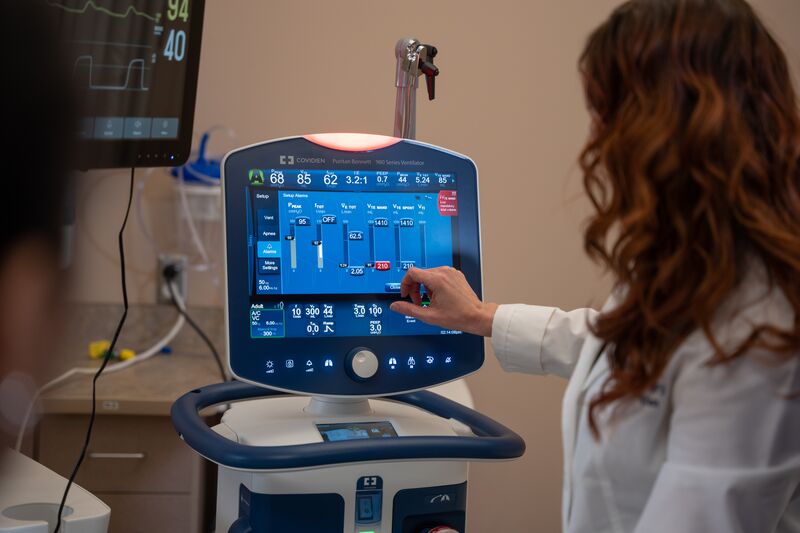
As a respiratory therapist, you will play an important part in any multidisciplinary health care team – working under the direction of a physician and taking care of patients of all ages with asthma, pneumonia, chest trauma, and other lung and heart diseases. On any given day, you could manage ventilators, monitor EKGs, and help with sleep studies and rehab, among other things.
Program details
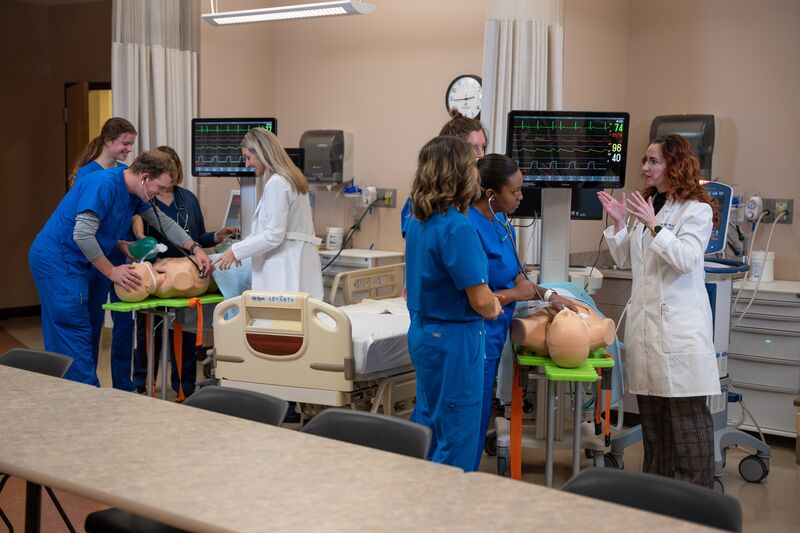
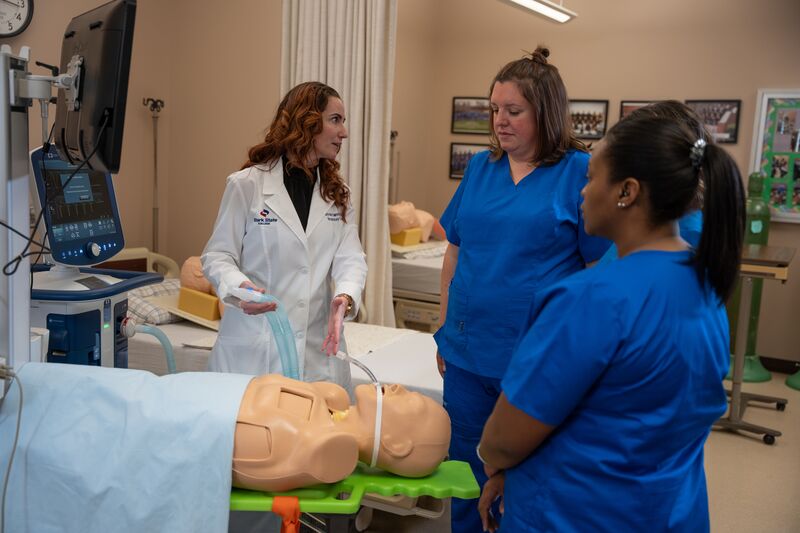
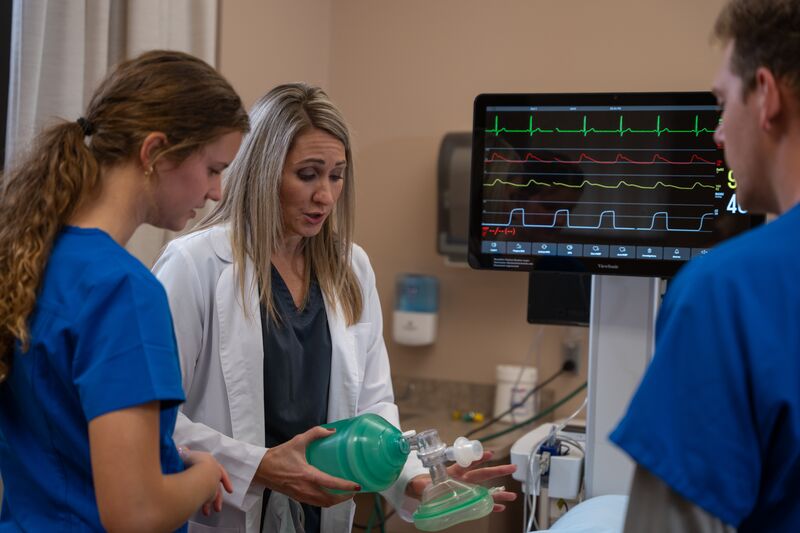
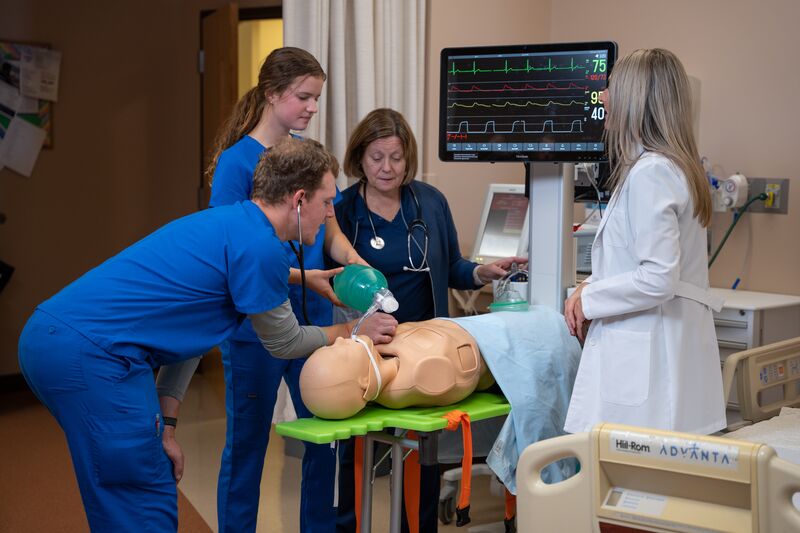
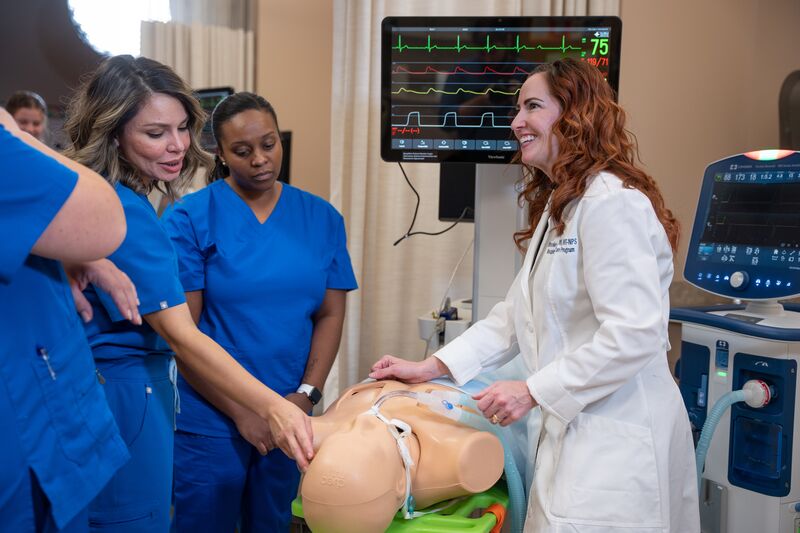
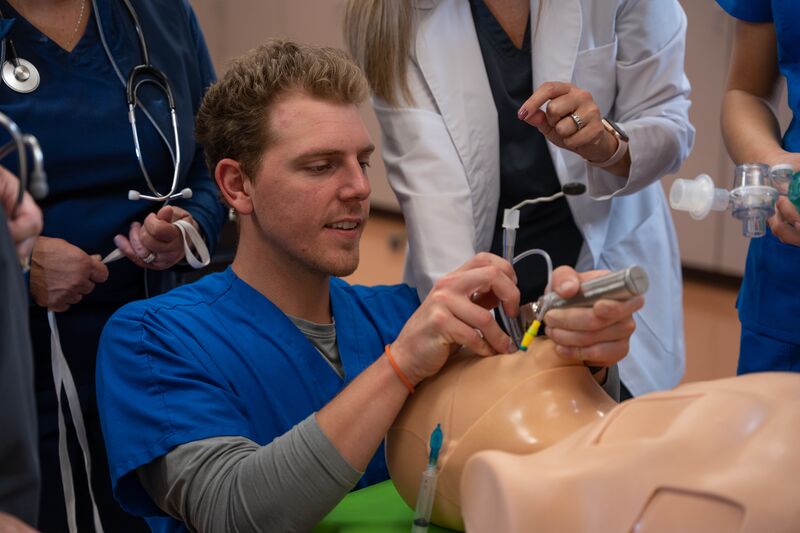
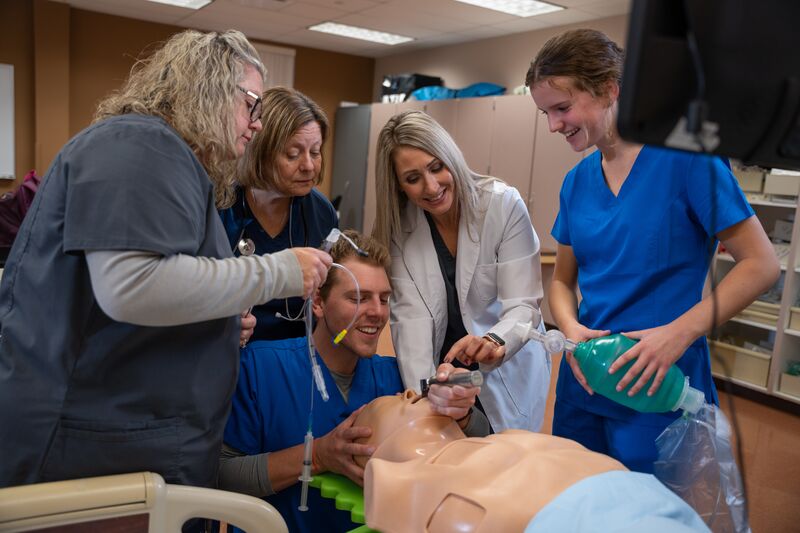
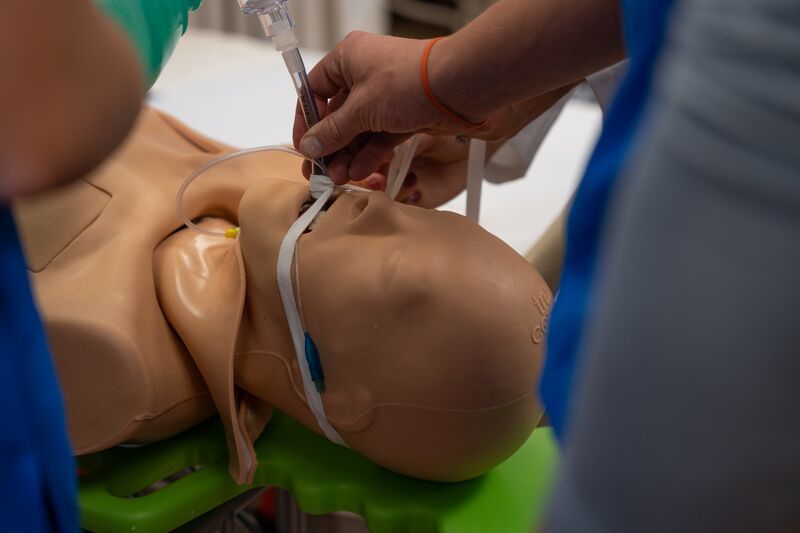
Stark State’s respiratory care program, offered on main campus, combines classroom, laboratory and clinical learning experiences at area hospitals in Stark and surrounding counties. You will participate in patient simulation scenarios in clinical simulation labs on and off campus and take part in advanced cardiac life support certification courses.
Our goal is to prepare you with demonstrated competence in the cognitive (knowledge), psychomotor (skills) and affective (behavior) learning domains of respiratory care practice as performed by registered respiratory therapists (RRTs).
Once you graduate, you are eligible to apply for the national exams required to become a registered respiratory therapist through the National Board for Respiratory Care.
- “B” or better in BIO101 or “C” or better in BIO121, BIO122 or BIO123
- “B” or better in MTH105 (substitutions for MTH124 or MTH125 will be accepted)
- Background check
- See the respiratory care application for more details.
- Note: Students must be at least 18 years old and a high school graduate or equivalency to start taking technical courses.
You can go on to earn a bachelor’s degree via an online completion program at a number of universities, and Stark State has transfer agreements with with The University of Akron and Youngstown State University.
- Apply to Stark State College.
- Meet with an admissions counselor.
- Complete the respiratory care application.
- Complete required background checks.
- Complete the course and GPA application requirements above.
- When you have completed all application requirements, contact the respiratory care program director for an appointment to review your application: 330-966-5458 ext. 5330 or bowen@starkstate.edu. You must bring the completed application and background eligibility notification to the appointment.
- You will be notified of your acceptance at the time of the appointment or via mail/email.
The completion of Stark State College’s associate degree in respiratory care meets the educational requirements for national credentialing and licensure in Ohio. Graduates of Stark State’s program are eligible to apply for the National Board of Respiratory Care’s Therapist Multiple Choice examination (TMC). Passing the exam at the low-cut score qualifies students for the National Board of Respiratory Care Certified Respiratory Therapist (CRT) credential. Students must pass the Therapist Multiple Choice exam at the high cut score to be eligible to sit for the second portion of the credentialing exams, the Clinical Simulation Examination (CSE). To qualify for the National Board of Respiratory Care Registered Respiratory Therapist (RRT) credential, one must pass both the TMC and CSE examinations. For more information regarding credentials, see nbrc.org.
One must be a registered respiratory therapist and be licensed in Ohio to practice in Ohio. After students earn their RRT credential, they must apply for licensure through the Ohio Medical Board. Stark State College has not determined whether completion of their CoARC accredited Respiratory Care program meets the educational requirements to apply for a professional license in other states outside of Ohio. See NBRC for a list of contact information for other state licensure agencies.
Many of Stark State’s employer partners offer tuition assistance with job placement opportunities after graduation. For more information on partners such as Akron Children’s Hospital, Mercy Medical Center, Summa Health and others, please contact the program coordinator.
CoARC is the organization that accredits respiratory therapy education programs in the United States. To achieve this end, it utilizes an ‘outcomes based’ process. Programmatic outcomes are performance indicators that reflect the extent to which the educational goals of the program are achieved and by which program effectiveness is documented.
See the CoARC website for more information on accreditation, program outcomes and list of all accredited programs. Stark State College’s respiratory care program is listed as program # 200354. Programmatic outcomes data reported on the CoARC website include:
- Three-year time period being reported.
- RRT credentialing success.
- Achievement of the high cut sore on the TMC Exam.
- Retention.
- Job placement.
- Overall graduate satisfaction.
- Overall employer satisfaction.
- Total number of program enrollees.
- Total number of program graduates.
- Maximum annual enrollment.
For more information on Stark State College’s Respiratory Care program outcomes please view complete reports on the Commission on Accreditation for Respiratory Care website coarc.com/students/programmatic-outcomes-data/.
| Graduation year | RRT exam success rate | Retention | Employment in field | Employer satisfaction | Graduate satisfaction |
|---|---|---|---|---|---|
| 2024 | 100% | 91% | 100% | 100% | 100% |
| 2023 | 100% | 100% | 85% | 100% | 100% |
| 2022 | 95% | 76% | 95% | 100% | 100% |
| 3-yr. avg. | 98% | 90% | 93% | 100% | 100% |
Stark State College’s respiratory care program, CoARC program #200354, awards an associate of applied science degree and holds continuing accreditation from the Commission on Accreditation for Respiratory Care (CoARC), coarc.com.
CoARC
264 Precision Blvd.
Telford, TN 37690
817-283-2835
Fax: 817-458-4219
Careers and outcomes
Respiratory therapists work under the direction of a physician as part of a multidisciplinary team of health professionals who provide care for patients with conditions such as asthma, emphysema, chronic bronchitis, pneumonia, chest trauma, as well as other lung and heart diseases. Respiratory therapists are trained in adult, pediatric and neonatal care.
For more information about the field of respiratory care, see aarc.org and/or morerts.com.
Areas of patient care include
- General medical
- Surgical
- Intensive care
- Emergency/trauma
- Pediatric and neonatal
- Home care
- Sleep
- Diagnostic
- Rehabilitation
- Long-term acute care
Job duties include
- Rehabilitation
- Administration of medical gases, including oxygen
- Aerosol therapy
- Hyperinflation therapy
- Bronchial hygiene techniques
- Arterial blood gas punctures
- Cardiopulmonary resuscitation
- Ventilator management
- EKG monitoring
- Diagnostic testing
- Sleep studies
In the classroom
Scroll through the images to see what Stark State College’s respiratory care program is all about.
FAQs
- Working full time is strongly discouraged. You must be able to maintain flexible hours. Clinical experiences consist of two or three eight to 12-hour days per week.
- You must obtain/maintain a “C” or better in all technical courses and selected non-technical courses in the curriculum.
- You may not be able to be placed at clinical sites, obtain licensure to practice or find employment if you have a positive background check. See health and public services criminal background check information for a list of potential disqualifying offenses.
- You may have difficulty finding a job if you smoke.
- Scholarship opportunities are available to help cover the cost of tuition/expenses. Go to our scholarship page and complete the online application.
Respiratory care practitioners must have the necessary clinical skills to carry out the duties and responsibilities allowing them to practice in a safe and effective manner. Respiratory care practitioners make use of the following: hearing, mobility, physical endurance and strength, motor skills, tactile senses and visual acuity. These physical requirements must be able to be sustained for up to 12 hours.
Hearing
Ability sufficient to hear and understand patients and staff, assess and monitor patient sounds, hear normal speech, hear without seeing lips, hear faint body sounds, hear alarms.
Mobility – physical endurance and strength
Mobility sufficient to support and move patients, stoop/squat, move quickly, climb/bend, lift 10-25 pounds continuously to move objects, lift 25-50 pounds of weight frequently, lift 50-100 pounds occasionally, push light equipment, push heavy equipment, walk, stand for extended periods of time, sustain repetitive motion.
Motor skills
Perform multiple tasks at the same time. Fine and gross motor skills sufficient to handle equipment and provide safe and effective patient care, eye-hand coordination, steady arm and hand movements while manipulating objects or assisting patients. Sit and maintain balance, stand and maintain balance, reach above shoulders, reach below waist, pick up small objects with hands, type using a computer.
Tactile
The ability to sense and or touch in a manner sufficient to assess the patient’s response to therapy. Feel vibrations, detect temperature (determine changes, warm, cold).
Visual
A sufficient ability to monitor and assess patients and equipment function, to have visual acuity to provide safe and effective respiratory care. See objects 20 inches away, see objects 20 feet away, distinguish color. Should a student feel that he/she may not be able to meet the technical standards or physical requirements, it is the responsibility of the student to notify the program director/department chair and the Disability Support Services Office.
Note: Students may be exposed to communicable diseases, body fluids, toxic substances, ionizing radiation and other potentially hazardous conditions common to a clinical environment.
Stark State’s respiratory care core program is only available on main campus in North Canton. However, the non-technical classes in the curriculum may be taken at any location. Currently there is only a day program.
There may be additional costs to students for health requirements, uniforms, etc. Please see the estimated program costs.
- We don’t provide advanced placement standing or accept prior learning experience.
- Respiratory care course transfers are not accepted since curriculum design, learning objectives and course content vary so much from learning institution to institution.
- Non-technical courses are generally transferrable. Transcripts from other colleges/universities should be made available to admissions for review.
At this point, it is not required that you have a bachelor’s degree for entry level into the profession. However, we do encourage you to consider furthering your education in the future. If you wish to obtain a bachelor’s degree in respiratory care, it can easily be done. Stark State has aligned the curriculum for the associate of applied science degree in respiratory care with several local universities. We have articulation agreements with The University of Akron and Youngstown State University. This eases the transferability between the institutions.
Stark State College is committed to equal opportunity for all and does not discriminate on the basis of race, color, religion, sex, gender, national origin, military status, pregnancy, disability, age, genetic information, or sexual orientation. The College and program adhere to all applicable non-discrimination policies related to faculty/staff employment and the admission and education of students.
Meet the faculty

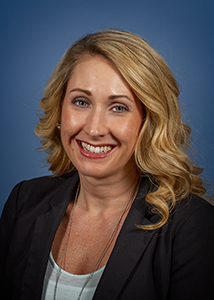
Brooke Owen, MSN, RN, RCP, RRT-NPS
Program Director for Respiratory Care, Department Chair, Respiratory, Laboratory and Surgical Technology
Jodi Lahmers, MEd, RRT
Director of Clinical Education, Respiratory Care
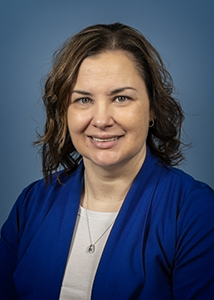
Jennifer Walton, MRC, RRT-NPS, EMT
Instructor, Respiratory Care
Related programs
Looking for more career options? Check out these other programs.
Lowest tuition around
Put your money toward your goals – not debt.
Stark State’s tuition costs up to 83% less than other area colleges and universities. Along with financial aid and scholarship opportunities, you gain the most value for your education without sacrificing quality.
Scroll to section
Brooke Owen
Program Director for Respiratory Care, Department Chair, Respiratory, Laboratory and Surgical Technology
330-494-6170 ext. 5330
Jodi Lahmers
Director of Clinical Education, Respiratory Care
330-494-6170 ext. 4220
Dr. M. Salman Khan
Medical Director
Take the next step
Whether you’re just starting out, making your college comeback or looking for a change, you belong at Stark State.